
SwimSum
Create an instant workout!


Critical Swim Speed (CSS) is a short pool test (400 m and 200 m) that estimates your sustainable threshold pace per 100 m — useful for tempo sets and tracking progress, not for comparing yourself harshly to anyone else.
- Swim 400 m – Hard, even time trial in the pool you train in.
- Recover fully, then swim 200 m – Same intensity; your 200 m should be faster per 100 m than your 400 m average.
- Use the calculator below – Enter both times to see your CSS, a simple skyline of where that sits next to familiar reference levels, and how your sprint vs endurance shape lines up.
CSS calculator
Type each time as m:ss (minutes, colon, seconds). A plain number is read as total seconds. Example trials are already filled in (6:40 for 400 m, 3:10 for 200 m) so you can tap Calculate CSS once and see a full demo — then swap in your own times.
Saving CSS history over time will tie into a future SwimSum sign-in (same idea as saving workouts and timer sessions); this page is calculator-only for now.
Your CSS snapshot
Pace skyline — read this first, then scan the buildings
- Taller solid column = faster CSS (fewer seconds per 100 m). Columns rise from the same grey “pool deck” so height is the story — not just colour.
- Scale comes from the five example paces for the lane you picked (junior pool vs masters vs tri, etc.).
- Green outline = this test. Grey dashed = your last save on this browser when it’s different enough to show.
- Hover (or long-press) a tower for the long note.
Your personal summary (this CSS, lane context, vs last save) is in the green box below — above the graphic so you read it before you look at the skyline.
The chart stays a toy map: “where might this sit next to story-book examples?” — not medals, national picks, or a live leaderboard of strangers.
Real peer comparison needs verified meet data and accounts (future SwimSum hub). This page only echoes your last trial stored locally.
Same pool, same rest, same intent next time if you want “last test” on here to stay meaningful.
This page lives at cssswimtest.com. For full workout generation (warm-up through cool-down), use the SwimSum app — preview below.
Want instant workouts instead?
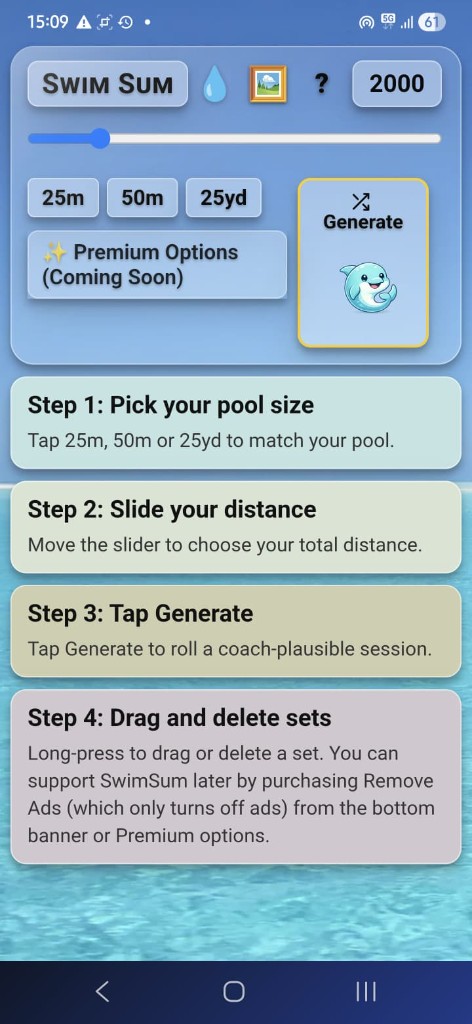
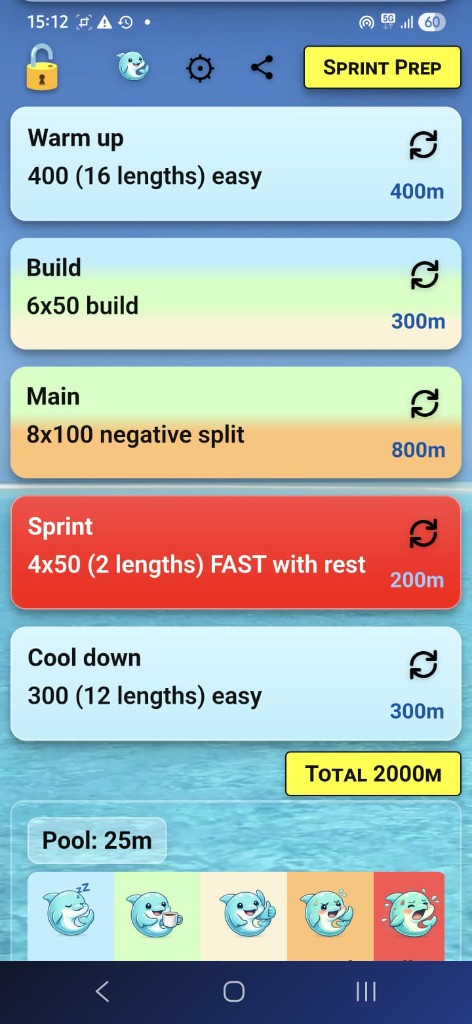
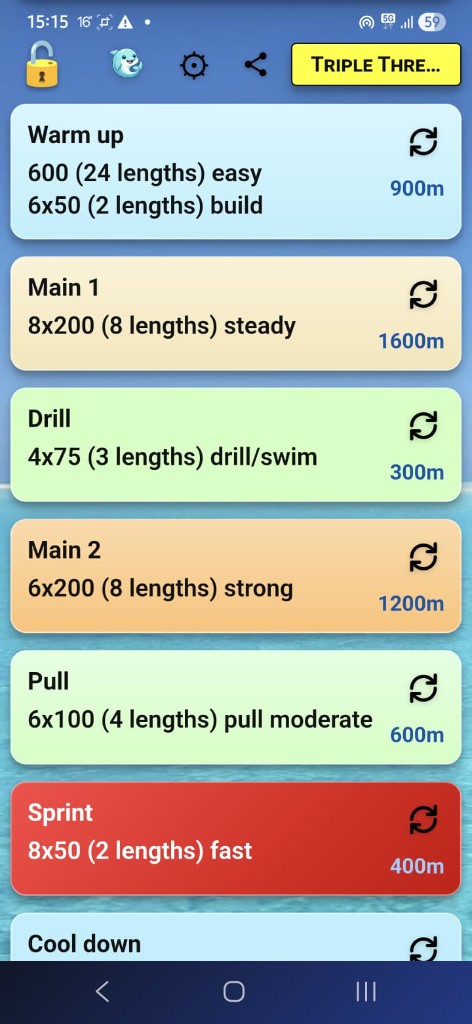
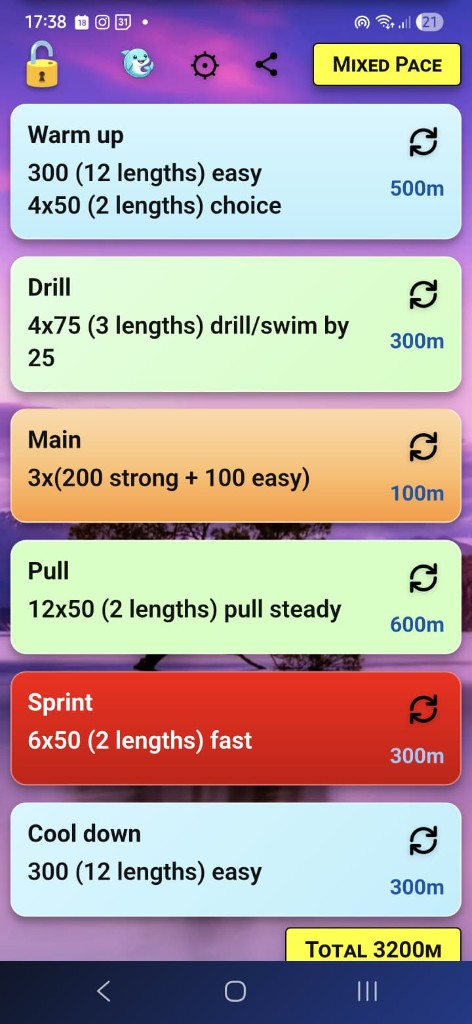
SwimSum on Android builds structured sessions for any pool length — the screenshots are from that app, not from the CSS test. Grab it on Google Play or read more at swimsum.com.
Who swims what? (very rough CSS per 100 m)
These are conversation starters — age, stroke, pool, and triathlon vs pool focus all move the numbers. We avoid words like “novice band”; a 2:00 per 100 m can be a great milestone for one athlete and a warm-up for another.
- Olympian / WC final night: often roughly 0:55–1:05 per 100 m freestyle CSS-style estimates for distance swimmers.
- NCAA / national-age excellence: often roughly 1:05–1:15 for many distance-focused racers.
- Strong college club or serious 18–35 triathlete swim: often roughly 1:15–1:30.
- Competitive masters (varies by age & event): many land roughly 1:20–1:45 — wide bands because 25-year-olds and 65-year-olds both race masters.
- “Comfortable” iron-distance swim fork: many finishers trend roughly 1:50–2:15 per 100 m in steady open-water style training when mapped back to the pool — highly individual.
- Diesel / Balanced / Sprinter: still describe how your 200 m compares to your 400 m — not “good or bad”, just what to emphasise next in training.